
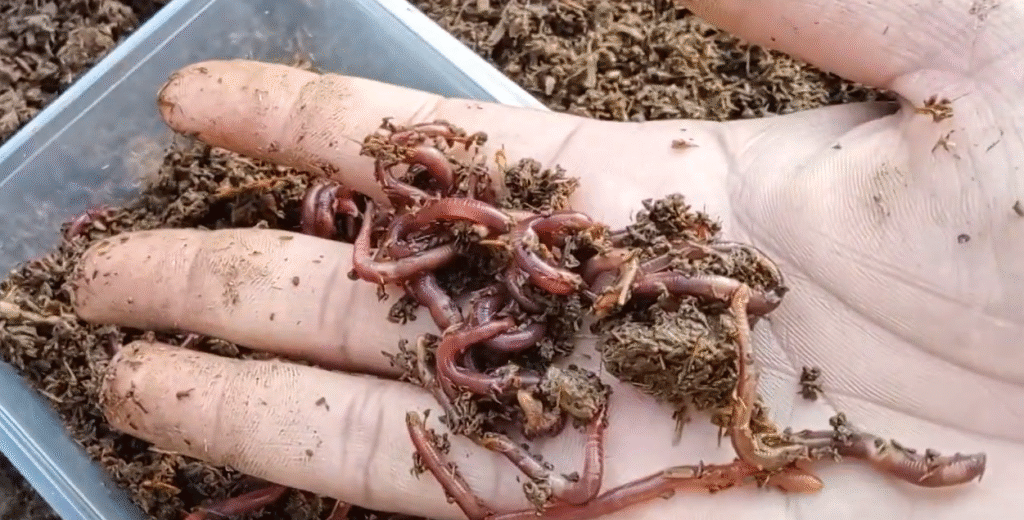
Vermiculture and vermicomposting are two hands-on, low-cost technologies that turn everyday waste into wealth (Black Gold). They use the natural habits of earthworms to produce two valuable products: vermicompost (a rich organic fertilizer) and live earthworms (which can be sold or used as animal feed). This blog explains what these twin technologies are, why they work well for households and farmers, and how you can set up a simple system at home or on a farm.
What are vermiculture and vermicomposting?
Vermiculture is the science and practice of breeding earthworms in large numbers. The goal is to steadily grow a healthy stock of worms. This is the “earthworm production” side of the system. To know more about how to select the right earthworm read “Choosing the Perfect Earthworm for Your Vermicompost“
Vermicomposting is the process of biodegrading organic waste with earthworms and microbes to produce vermicompost. This is the soil-building, plant-friendly product.
Together, these technologies form a loop: you grow worms (vermiculture) and use them to compost waste into vermicompost (vermicomposting). The result has two outputs: a nutrient-rich biofertilizer for crops and a ready source of worms for sale or for use as feed or bait.
How these twin method promising:
Cost savings: Chemical fertilizers are often expensive. Vermicompost offers a cheaper, sustainable alternative that still boosts crop yields.
Waste management: Kitchen scraps, garden waste, and agricultural by-products become valuable inputs rather than costly disposal problems.
Local empowerment: Simple vermicomposting units can be built with locally available materials. This makes the technology accessible to households and small farms.
Income opportunities: Harvested earthworms and vermicompost can be sold, creating an extra income stream.
Environmental benefits: Vermicomposting reduces waste, lowers chemical runoff, and improves soil health through organic matter and microbial activity.
How to set up simple vermiculture and vermicomposting units
You don’t need fancy equipment or a large farm to start vermicomposting. You can easily set up a simple unit at home using locally sourced materials. Here are the basic three requirements:
1. The Vermireactor (The Worm Bin or Composting box): This is simply a container where your earthworms will live and work. Vermireactors can be made from wood, plastic, or even earthenware. For households and smallholder farmers, a wooden or plastic box is often the most practical. The key is to create an environment that’s comfortable for your worms. This means ensuring good ventilation (so they don’t suffocate) and proper drainage (to prevent waterlogging).
A Simple Design: A common and effective design involves a two-chamber system. The upper chamber holds the bedding and food, while a lower chamber collects excess liquid (vermiwash) through a perforated layer. The lid should also have ventilation holes or be covered with a fine mesh to keep out pests and predators. Don’t fill the composting chamber more than three-quarters full to allow for air circulation. The sides of the lower chamber should also be perforated. You might consider adding wheels or placing the bin on something to keep it elevated, which helps with drainage and makes it easier to move. The collected vermiwash can be used as a potent liquid fertilizer.
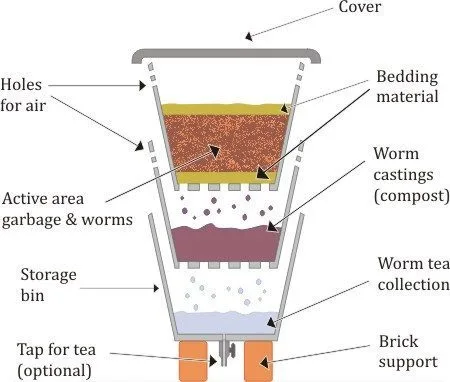
2. Bedding Materials and Food Source: A good bedding mix retains moisture, cushions the worms, and provides initial food. A common mix is cow dung with dry leaves, straw, hay, fruit peels, grasses, and wood dust or shavings. Before adding your worms, it’s crucial to “pre-compost” your bedding materials for about 7-14 days. This helps remove any harmful gases and excess heat generated during fermentation, which could harm the worms.
What Do Worms Eat? Worms love a variety of organic waste! Ideal Food consists Fruit and vegetable scraps, coffee grounds, tea bags, shredded newspaper (without ink or dyes), and well-rotted manure are excellent choices.
Start with a small amount of food, spread it over the bedding, and gradually increase the quantity as the worm population grows and their consumption rate increases. The amount of food a worm eats varies, but generally, it’s about 100-300 mg per gram of body weight per day.
Foods to Avoid: Greasy or oily foods, dairy products, meat products, heavily salted or spiced foods, and citrus peels in large quantities. These can attract pests, create odors, or harm your worms
3. Starter Earthworms: You need the right kind of earthworms to get started. While there are many types of earthworms, epigeic earthworms are best suited for vermicomposting. These are the surface-dwelling types that are active in decomposing organic matter.
Popular Choices: In temperate regions, Eisenia fetida (red wigglers) are widely used due to their prolificacy and resilience. In tropical climates, Eudrilus eugeniae is another excellent option. If these aren’t readily available, you can often find local epigeic species that will work well. You can even conduct a small pilot test to see which native species thrive best in your conditions.
For identification of earthworm you can use the following guide: https://www.imperial.ac.uk/media/imperial-college/research-centres-and-groups/opal/SOIL-4pp-chart.pdf
Harvesting vermicompost and worms
Vermicompost is usually ready after about 3–4 months of active processing. In some setups, it can take longer depending on substrate and environmental conditions. Also as your worm population grows, you may need to harvest some of the adult worms to prevent overcrowding or to start new composting units. A common method is to move the worms to a new feeding zone and collect the finished vermicompost from the bottom or after a light sorting. Vermiwash (the liquid that drains from the system) is a valuable by-product. It can be diluted and used as a foliar fertilizer or soil drench.
Tips for Success: Keeping Your Worms Happy
To ensure your vermicomposting project is a success, keep these factors in mind:
Substrate Type: A mix with balanced organic matter supports faster digestion and higher nutrient release.
pH: Earthworms prefer a neutral pH, generally between 6.5 and 7.0.
Temperature: Different worm species have different temperature preferences, but a range of 18-25°C (65-77°F) is generally good for most composting worms. Cooler climates may require insulation or indoor setups.
Moisture: Worms need a moist environment, but not one that is waterlogged. The substrate should be moist enough to feel like a wrung-out sponge.
Light and safety: Earthworms are sensitive to light and dryness. Keep the unit shaded or well-ventilated to avoid drying out.
The Bottom Line: Waste to Wealth
Vermiculture and vermicomposting are powerful, accessible technologies that allow you to transform everyday waste into valuable resources. Whether you’re a seasoned gardener or just starting, embracing vermicomposting can lead to healthier soil, more abundant harvests, and a more sustainable lifestyle.
Start small, learn as you go, and unlock the incredible potential of earthworms to enrich your farm and your life.