
For those who wants to move beyond the traditional farming and wants to explore the lucrative agri-plantations sector. These long-term investments offer stable returns and capitalize on growing demand for specific produce and value-added products. This article identifies ten promising agri-plantation opportunities in 2025, providing insights into market potential, investment rationale and essential advice for aspiring investors.
1. Bamboo Plantation

Market Rates & Trends: Supported by the National Bamboo Mission, the industry is projected to reach ₹50,000 crore. Raw bamboo poles sell for ₹1,500 to ₹5,000 per tonne but value-added products yield exponentially higher returns.
Rationale for Investment: Bamboo has a short harvest cycle (3-5 years) and a lifespan of over 50 years, ensuring recurring harvests. Demand is immense from construction, paper pulp, furniture and handicraft industries.
Practical Advice: Avail subsidies under the National Bamboo Mission. The highest profitability lies in on-site value addition—consider setting up a unit to produce agarbatti sticks, furniture or bamboo-based fabrics.
2. Sandalwood (Santalum Album) Plantation

Market Rates & Trends: One of the world’s most expensive woods, its heartwood sells for ₹70 lakh to ₹1.2 crore per tonne. Demand from the international fragrance, luxury carving and pharmaceutical industries vastly outstrips supply.
Rationale for Investment: This is a generational wealth-building asset. Its value appreciates consistently with age, offering potentially astronomical returns on a long-term investment.
Practical Advice: This is a 15-20 year commitment. Secure absolute legal clarity on ownership and harvesting permissions from state forest departments. Use intercropping in the initial years to generate interim income.
3. Teak (Sagwan) Plantation

Market Rates & Trends: High-quality plantation teak sells for ₹6,000 to ₹10,000 per cubic foot. There is constant demand for premium furniture, interior décor and construction, ensuring a stable and secure market.
Rationale for Investment: Teak is a classic, stable and high-appreciation tangible asset. It acts as a reliable hedge against inflation and economic volatility.
Practical Advice: Invest in modern, high-yield, fast-growing clonal varieties that can be harvested in 15-20 years instead of the traditional 30-40, drastically improving ROI and reducing risk.
4. Cashew Plantation

Market Rates & Trends: Raw Cashew Nuts (RCN) fetch ₹120-₹200 per kg. India is a global leader in processing and consumption and worldwide demand for healthy snacks is on a steady rise.
Rationale for Investment: A drought-resistant crop perfectly suited for the lateritic soils of coastal regions. It begins yielding from the 3rd year and has a long productive life of over 40 years.
Practical Advice: The maximum profit is in processing. Investing in or partnering with a processing unit to export shelled kernels can double or triple your returns compared to selling raw nuts.
5. Mango (Amrapali/Imam Pasand) Orchards

Market Rates & Trends: Premium varieties like Alphonso, Kesar and Imam Pasand can sell for ₹100-₹400 per kg in specific markets. There is immense potential for export, processing (pulp, juices) and branded sales.
Rationale for Investment: Mango is India’s king of fruits. Dwarf varieties like Amrapali allow for high-density planting, dramatically increasing yield per acre and making maintenance more efficient.
Practical Advice: Allocate capital for post-harvest infrastructure: ripening chambers, grading units and cold storage. Obtain export certifications (via APEDA) to access premium international markets.
6. Oil Palm Plantation

Market Rates & Trends: Heavily supported by the National Mission on Edible Oils – Oil Palm (NMEO-OP). The government offers a Fixed Remunerative Price (FRP), shielding farmers from market volatility. India imports ~60% of its edible oil, representing a massive domestic demand.
Rationale for Investment: The highest oil-yielding crop per hectare. Significant government subsidies cover most of the initial setup cost. It offers a guaranteed market with assured pricing.
Practical Advice: This is only viable in specific climatic zones with high rainfall or assured irrigation. Confirm your land’s suitability and proximity to a processing unit (FFB must be processed within 24 hours) before any investment.
7. Agarwood Plantation

Market Rates & Trends: Agarwood always been in High demand specially in the Gulf region due to its traditional touch. Price of a 1kg of heartwood can range from ₹2 lakh to ₹5 lakh depending on the resin quality and quantity.
Rationale for Investment: Cultivating Agarwood is not everyone’s cup of tee. It requires Knowledge and skill for the inoculaton process and extraction of the resinous wood. But, If managed properly, agarwood farming can be a highly profitable, contributing to the global fragrance and wellness markets.
Practical Advice: By understanding the costs, committing to proper techniques and playing the long term game, you can tap into a global market who are hungry for this legendary resource.
Click to check Complete guide for the cultivation of Agarwood.
8. Coconut-Based Multi-Tier Farming

Market Rates & Trends: Beyond coconuts (₹15-₹30 per nut), this model integrates revenue from intercropped species like Cocoa, Black pepper, Chui jhal and Pineapple, creating multiple, continuous income streams from the same plot of land.
Rationale for Investment: Maximizes land use efficiency and provides risk-diversified, year-round income. It’s a highly sustainable and economically resilient model promoted by ICAR.
Practical Advice: Implement the proven “3-tier system“: Coconut (canopy layer), Pepper (climber on coconut trees), and Cocoa or Pineapple (ground layer). This efficiently utilizes space, light, and nutrients.
9. Melia Dubia (Malabar Neem)
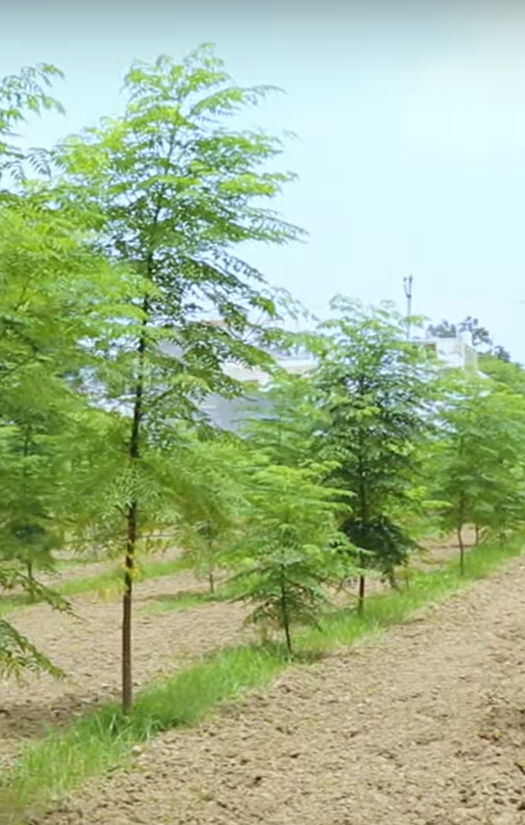
Market Rates & Trends: High-quality and with girth range from 50-120cm can sells for ₹350 to ₹500 per cubic foot. There is constant demand for plywood, furniture and packing industries making it a preferred choice.
Rationale for Investment: These are fast-growing timber species with high commercial value. Preferred by the plywood industry and widely used in multiple applications. High adaptability to different soil types and climatic conditions.
Practical Advice: Invest in modern, high-yield, fast-growing clonal varieties. Melia Dubia takes around 10 years to mature for timber harvesting. However, in agroforestry settings, it can be harvested earlier when used for smaller applications.
Click to understand the detail plantation process of Melia Dubia.
10. Moringa Plantation

Market Rates & Trends: It is also known as Sahjan or Munagakaya in various regions. Every part of this tree—from its drumsticks (pods) to its leaves—is valuable. Along with selling the fruits (Drumstics), different moringa products can be sold in market at great value. Such as leaf powder, Ben oil, Moringa tea, Seed cake etc.
Rationale for Investment: Moringa is Drought tolerant, Low maintenance, fast growing and High demand crop which makes it a great choice for the investing in Moringa plantation. First harvest of tender drumsticks will be ready in 6-8 months. For leaves, you can start light harvesting after 3-4 months. A well-maintained tree can produce for over 10 years.
Practical Advice: Choose a good quality variety of Moringa for your plantation that will be suitable to the land. Using seeds have a high germination rate but using hard stem cuttings of about 1m length will make a direct clone of the mother plant, preserving its quality.
Click here for a Guide to Profitable Moringa Cultivation
Investing in agri-plantations offers a compelling path to stable and significant returns. By choosing wisely, understanding the market dynamics and focusing on sustainable practices, investors can tap into the immense potential of agricultural landscape. Thorough research, careful planning and a long-term vision are key to success in these ventures.