
Introduction
Agriculture is the backbone of food security, rural livelihoods, and overall economic development in many countries, including India. At the heart of successful farming lies irrigation water, a critical resource that not only enhances crop productivity but also contributes to sustainable food systems and the resilience of rural communities.
However, in today’s rapidly changing climate, the availability and management of irrigation water have become increasingly challenging. With rising global temperatures, more frequent heatwaves, and prolonged droughts—conditions scientists now describe as “global boiling”—farmers face shrinking water supplies and growing uncertainty.
This article explores the pressing challenges that irrigation water faces in agriculture, as well as innovative interventions, strategies, and technologies that can ensure its efficient use. The solutions outlined here are particularly relevant for smallholder farmers, policymakers, and agribusiness practitioners who are working to safeguard water resources in an era of climate extremes.
What is Global Boiling?
Unlike traditional climate change discussions that focus on “global warming,” the concept of global boiling emphasizes the extreme and disruptive nature of the current climate crisis. It refers not just to rising average global temperatures, but also to recurring and intense heatwaves, severe droughts, and extreme environmental changes that directly affect agriculture and natural resources.
Consequences for Irrigation Water
Higher Evapotranspiration: Increased temperatures accelerate water loss from both soil and crop surfaces, reducing the overall water available for plants.
River Flow Declines: Research indicates that water flows in rivers, especially in sensitive regions like the Mediterranean, are expected to drop sharply. This creates stress on both agriculture and urban water supplies.
Desertification & Drought: Extended dry seasons and soil degradation make it harder to sustain farming in traditional agricultural areas.
Increased Competition: With less available water, competition rises between urban, industrial, and agricultural users, often leaving farmers with deficits.
The Foundation of Change: Data-Driven Precision Water Management
To combat a problem of this magnitude, our approach must be precise, efficient, and intelligent. The era of flooding fields and hoping for the best is over. The future of irrigation lies in giving crops exactly what they need, exactly when they need it, and not a drop more.
1. Know Your Needs: The Power of Planning: The first step, as outlined in the research, is a meticulous assessment of irrigation requirements. This involves a deep understanding of the local agro-ecological context. Modern farmers can now leverage a suite of tools to achieve this:
- Meteorological Data: Real-time and forecasted weather data from local agricultural meteorology networks help predict rainfall, temperature, and humidity, allowing for proactive irrigation scheduling.
- Soil Data: In-field sensors that measure soil moisture levels provide a direct line of communication with the ground, telling a farmer precisely when the root zone is dry.
- Crop-Specific Knowledge: Different crops have different water needs at various growth stages. By tailoring irrigation schedules to the specific crop and its stage of development, water use can be dramatically optimised.*
2. Every Drop Counts: Embracing Efficient Irrigation Systems: This data-driven knowledge is most powerful when paired with technology that delivers water efficiently. This is where systems like drip irrigation become non-negotiable.
- Drip Irrigation: By delivering water slowly and directly to the base of each plant, drip irrigation minimises losses from evaporation and runoff. The water goes straight to the root zone, where it’s needed most. Research shows that for some crops, particularly tree cultivations, water savings can be as high as 65% compared to traditional flood irrigation.
- Underground Irrigation: Taking this concept a step further, subsurface drip irrigation delivers water directly into the root zone beneath the soil, virtually eliminating surface evaporation.
3. Building a Sponge: The Critical Role of Soil Health: Technology alone is not enough. The soil itself must be conditioned to act as a natural reservoir. The key to this is organic matter. By incorporating compost, manure, or cover crops, we can fundamentally improve soil structure. Healthy soil rich in organic matter is more porous and aggregated, allowing it to absorb and hold more water. This “sponge effect” means the soil can retain moisture from rainfall or irrigation for longer periods, reducing the frequency of watering and making the farm more resilient to short-term droughts.
Modernising the Backbone: Upgrading Our Water Infrastructure
Even the most efficient on-farm systems will fail if the infrastructure delivering the water is outdated and wasteful. A significant portion of water loss occurs long before it ever reaches the field.
1. Plugging the Leaks: From Open Canals to Modern Networks: For decades, water has been transported through vast networks of open-air canals. These are notoriously inefficient, losing enormous quantities of water to evaporation under the sun and seepage into the ground. The solution is a strategic shift towards modern, closed, and preferably underground pipeline networks. This one-time investment protects water from the elements, ensuring that the volume of water released from a reservoir is the same volume that arrives at the farm gate.
2. Pumping Smart: Energy Efficiency Meets Water Conservation: The energy required to pump water from boreholes or rivers is a major operational cost for farmers and a significant drain on power grids. Modernising pumping stations with energy-efficient equipment is crucial. A key intervention is the use of variable frequency drives (VFDs) on electric motors. These components act like a dimmer switch for the pump, allowing its speed to be adjusted based on the real-time pressure and flow requirements of the irrigation system. Instead of running at full power all the time, the pump operates only as hard as it needs to, resulting in significant savings in both electricity and water.
A Broader Perspective: Holistic and Nature-Inspired Solutions
Solving the water crisis requires us to think beyond the immediate farm and embrace a wider range of integrated solutions that work with nature, not against it.
1. Harvesting the Heavens and Storing for a Dry Day: In an era of unpredictable rainfall, we must capture every drop we can. This means strategically planning and constructing multiple, smaller reservoirs closer to where the water is needed, reducing transportation losses. On a farm level, rainwater harvesting from the roofs of barns, greenhouses, and other structures can provide a substantial, cost-free source of high-quality water for irrigation, recharging aquifers, and reducing reliance on groundwater.
2. Crop Choices: Drought-Resistant and Traditional Varieties: For generations, farmers cultivated local, traditional plant varieties that were perfectly adapted to their specific climate and soil conditions. Many of these landraces are naturally more drought-resistant and have lower water requirements than modern high-yield hybrids. There is a growing movement to rediscover and reintroduce these resilient varieties. Alongside this, plant breeders are actively developing new drought-resistant cultivars that combine high yields with low water consumption, offering farmers the best of both worlds.
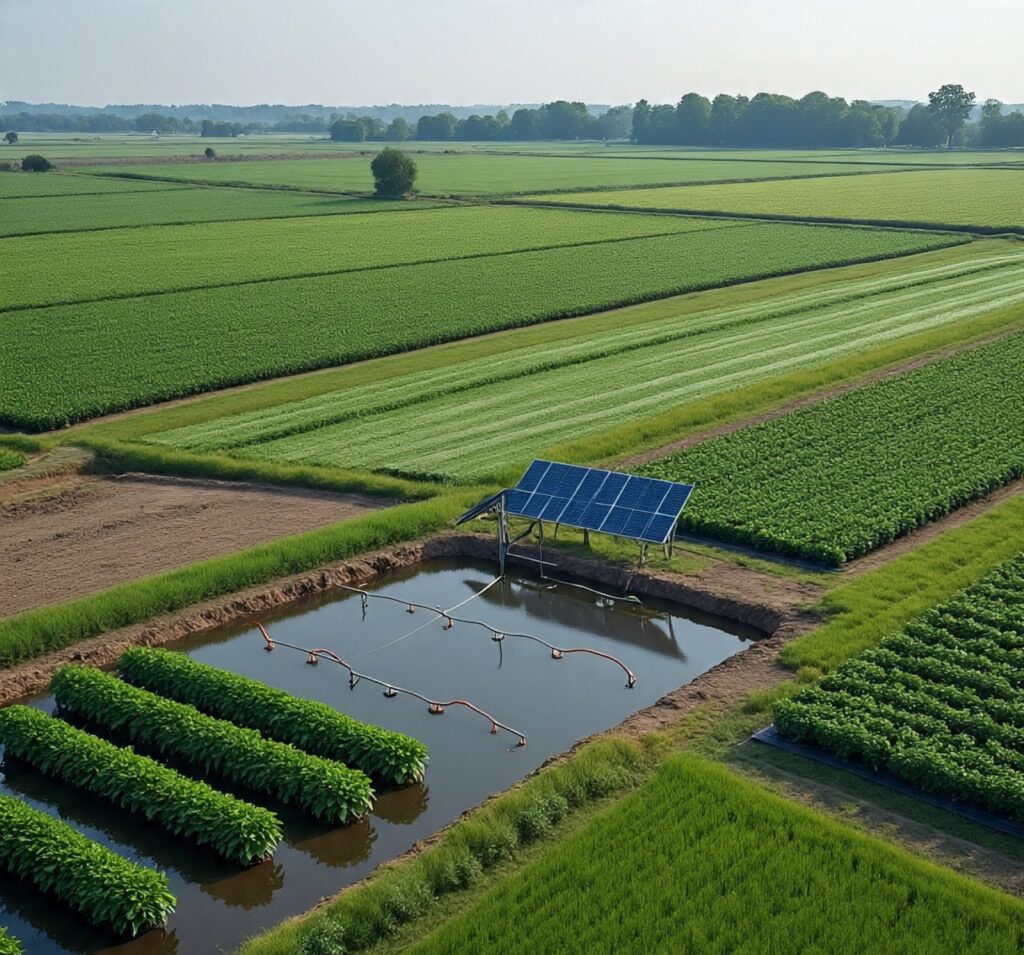
3. The Renewable Energy Synergy: The link between water and energy is unbreakable. Pumping and treating water requires energy, and generating energy often requires water. By powering irrigation systems with renewable energy sources like solar panels, farms can reduce their operational costs, decrease their carbon footprint, and achieve greater energy independence. This synergy is particularly potent for remote, off-grid farming communities.
4. Tapping the Ocean: Desalination as a Strategic Reserve: In coastal regions facing acute freshwater shortages, seawater desalination, preferably powered by wind or solar energy, presents a viable, albeit expensive, intervention. While not a universal solution, it can serve as a critical lifeline in arid areas, ensuring water availability for high-value crops and communities when all other sources are exhausted.
The Way Forward: Every Drop Counts
The era of global boiling is not a distant forecast; it is our current reality. The challenges it poses to our agricultural water supply are immense, but they are not insurmountable. The time for incremental change is past; the situation demands bold, decisive, and immediate action.
The solutions are available. They lie in the intelligent application of technology like AI-powered irrigation scheduling, the widespread adoption of efficient systems like drip irrigation, the crucial investment in modern infrastructure, and a renewed respect for the wisdom of nature through soil health and drought-resistant crops.
Ultimately, however, technology and infrastructure are only tools. The most critical intervention is a shift in mindset. We must collectively recognize that every single drop of irrigation water is precious. A positive, proactive approach from policymakers, engineers, scientists, and, most importantly, farmers is the catalyst that will turn these strategies into widespread practice. The future of food security depends on it. The time to act is now.